

WAKAYAMA · THE UME ATLAS
Let’s explore everything about ume.
Wakayama’s Great Ume Encyclopedia. Beyond Nanko Ume.
From a single ume fruit, Japan’s nature, history, and daily life unfold.
The more you learn, the more delicious and endearing ume becomes.
ROOTED IN WAKAYAMA
To know ume is
to know Japan.
Ume blossoms are among the first to bloom in spring. Their abundant fruit has
accompanied people’s lives, shaping Japan’s food culture and
regional character over time.
FIND YOUR UME
Comparing Representative Ume Cultivars
Cultivar and ripeness are two different things. The differences in names open up the pleasure of choosing.
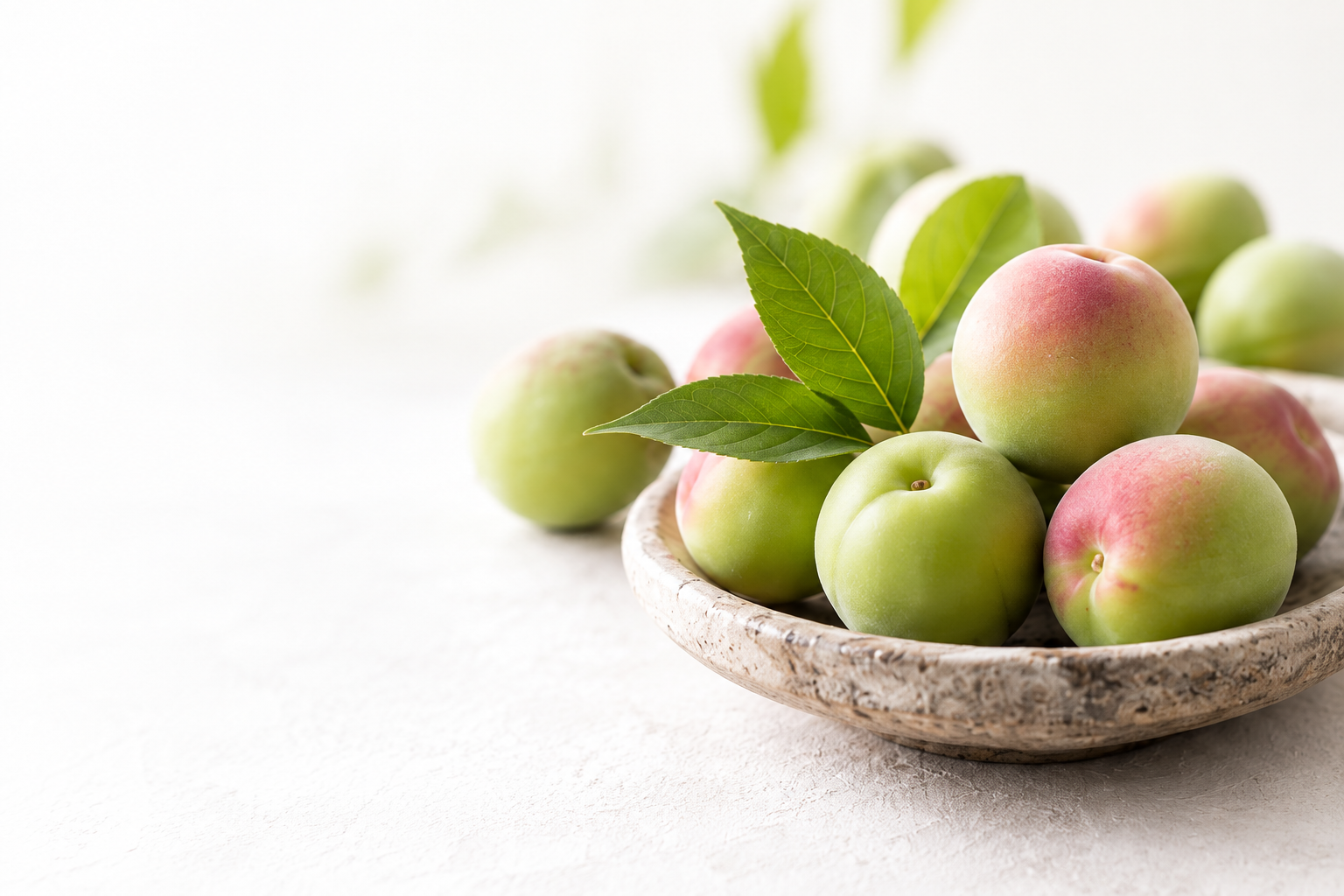
The fruit images are AI-generated illustrations for guidance only. They cannot be used to identify actual cultivars.
| Cultivar Name | Nanko | Gojiro | Purple Queen | Purple Nanko | Tsuyuakane |
|---|---|---|---|---|---|
| Characteristics | Thin skin and abundant flesh | Green ume that appears early in the season | Small reddish-purple ume | A bud sport (branch mutation) of Nanko | Derived from a cross between ume and plum |
| Points of Interest | Umeboshi (pickled ume) and ume liqueur | Ume liqueur and syrup | Ume work enjoyed for its color | Reddish-purple fruit | Red flesh |
ume work.
Pickling, preparing, tasting.
Ume gently accompanies
our everyday lives.
Basic Knowledge About Ume
What Kind of Fruit Is Ume?
Ume, plum, apricot. They may look similar side by side in a store, but they can’t be called by the same name. Understanding what ume actually is first makes the later discussion of cultivars far more interesting.
Read This Chapter in Detail →Understanding the Differences Between Cultivars
Choose by size alone, and you’ll miss what makes each ume distinctive. Ripening time, skin, flesh, color, pollination traits — each cultivar has its own stage where it shines.
Read This Chapter in Detail →Ume Season and Calendar
When the day you saw the blossoms and the day you salted the ume connect in your mind, the resolution of the season sharpens. For the growing region, ume is not a crop confined to early summer alone.
Read This Chapter in Detail →Frequently Asked Questions
The words you think you already know are the most interesting to unpack. A collection of ume questions worth taking home as a story to tell.
Read This Chapter in Detail →Placing a single umeboshi on a bowl of rice. Behind that small gesture lie winter blossoms, an early-summer harvest, hands salting the fruit, and forests left standing on the mountainside. Wakayama’s ume has far too much story to end with a simple “Nanko ume is delicious.”
Here, we’ve woven together the botany, history, cultivars, processing, and culture of ume so that it’s useful whether you’re buying ume, doing your own ume work at home, or planning to walk through the growing region. Start with whichever chapter catches your interest. If you want to know more, open the headings and go deeper. The next time you stand in front of an ume display, you’ll likely find yourself noticing far more than before.
So What Exactly Is Ume, Anyway?
Ume, plum, apricot. They may look similar side by side in a store, but they can’t be called by the same name. Understanding what ume actually is first makes the later discussion of cultivars far more interesting.
Ume, Plums, and Apricots Are Not “the Same Fruit”
The botanical name of ume is Prunus mume. It belongs to the rose family, genus Prunus, and in English is written as “Japanese apricot” or “ume.” The Royal Botanic Gardens, Kew lists its native range as south-central China through northern Indochina. Although it’s deeply rooted in Japanese food culture, it isn’t a fruit tree that grows wild only in Japan.
If you rely solely on the English word “plum,” you may end up picturing the fresh-eating plums of the West, and things get confusing. If you’re using an ume-work recipe outside Japan, it’s worth first confirming exactly what fruit the ingredient is. Having a similar name doesn’t mean the same processing conditions apply.
Flowering Ume and Fruiting Ume: Two Different Doors into Daily Life
Hana-ume (flowering ume) refers to trees grown for the shape, color, and way their blossoms open; mi-ume (fruiting ume) refers to those grown for their fruit. This is a distinction based on how the tree is used, not a division into two entirely separate plant species. The first trick is not to assume that the name of a blossom that caught your eye during ume viewing is automatically the name of a cultivar suited for umeboshi.
The season for viewing blossoms and the season for buying fruit are also different. From winter into early spring you can enjoy the branches and blossoms; in early summer, ripeness and fragrance. It’s a fruit tree that shows you two completely different faces in a single year.
Separating Cultivar, Growing Region, and Product Name
“Nanko” is a cultivar, “Product of Wakayama Prefecture” is a growing region, and “honey ume” is a description of flavoring or product type. All three may appear on the same package, but they indicate different things. Just because a package says “Nanko” doesn’t mean it’s from Wakayama, and there’s no separate plant cultivar called “honey ume.”
When buying, read the cultivar name for the fruit’s individual character, the country/region-of-origin labeling for where the fruit actually came from, and the ingredient list for how it was finished. Reading in this order lets you see information that lies outside the big promotional lettering.
Royal Botanic Gardens, Kew | Prunus mume Kishu Tanabe Ume Promotion Council | Ume in Japan e-Gov | Food Labeling Standards
The History of Ume Reaches Far Beyond the Table.
People who wrote poems about the blossoms, people who planted trees on the mountainside, people who painstakingly selected for quality. The ume of Kishu was not suddenly invented by any single person.
In the Nara Capital, Ume Was Already Part of Culture
It’s difficult to pin the arrival of ume in Japan to a single year. What is certain, though, is that ume appears abundantly in Nara-period literature. The Kishu Tanabe Ume Promotion Council notes that the Man’yoshu contains 118 poems about ume. Looking back from a present day dominated by images of cherry blossoms, the intensity of that earlier gaze on ume feels fresh.
The plum-blossom banquet held at Dazaifu in 730 is an iconic scene from that era. The preface known as the source of the era name “Reiwa” is also connected to this same collection of plum-blossom poems. From the very beginning, the story of ume was never only about flavor.
How the Meaning of Planting Ume in Kishu Changed at the Start of the Edo Period
In the history of Kishu’s ume production, an important milestone is the early Edo period, when Ando Naotsugu, the lord of Tanabe, encouraged its cultivation. In land that wasn’t all flat, fertile paddy and field, growers turned to slopes to obtain fruit. Ume growing was also an act of confronting the constraints of the land itself.
By the mid-Edo period, umeboshi was reportedly being shipped to Edo along with lumber, charcoal, and mikan. We shouldn’t project today’s high-quality Nanko ume directly back onto that era. From a time when local historical records called the trees “yabu-ume” (bramble ume), an accumulation of selection and processing has continued ever since.
The “Nan” in Nanko Ume Isn’t Just “South” for “Southern Land”
Tracing the origins of Nanko ume leads to a painstaking survey of superior trees. According to Minabe Town, an effort to select excellent cultivars began in 1950, and a lineage locally known as “Takada ume” earned high marks. The horticulture department of Minabe High School was also involved in the survey.
The name “Nanko” carries the overlapping histories of that school and the selection process. The path leading to registration in 1965 is not a short story of a chance discovery instantly becoming a nationwide brand. The observations of farmers and the research of a school remain embedded in the name of the single ume you’re eating today.
Read Historical Reputation and Modern Health Claims Separately
That ume was prized as a preserved food, that demand rose during outbreaks of illness, that it was spoken of as medicine — all of this is fascinating as history. However, none of it can be substituted for a modern proof that it “prevents or treats” any particular disease.
The story of ume is plenty interesting without turning it into a cure-all. How salt and acidity have been used in cooking, how an easily transportable preserved food helped commerce spread — reading it from that angle brings the outline of everyday life into view.
Kishu Tanabe Ume Promotion Council | Ume in Japan Kishu Tanabe Ume Promotion Council | Ume of Kishu Minabe Town | Specialty Products – The Birth of Nanko Ume MAFF | Umeboshi of Wakayama
Beyond the Ume Groves Lies the System That Grows Them.
To understand Kishu ume, look at the mountains, not just the fruit. Ume groves, coppice woodland, bees, charcoal-making. Things that seem far apart are in fact connected.
The Globally Important Agricultural Heritage Isn’t an Award for “One Amazing Ume”
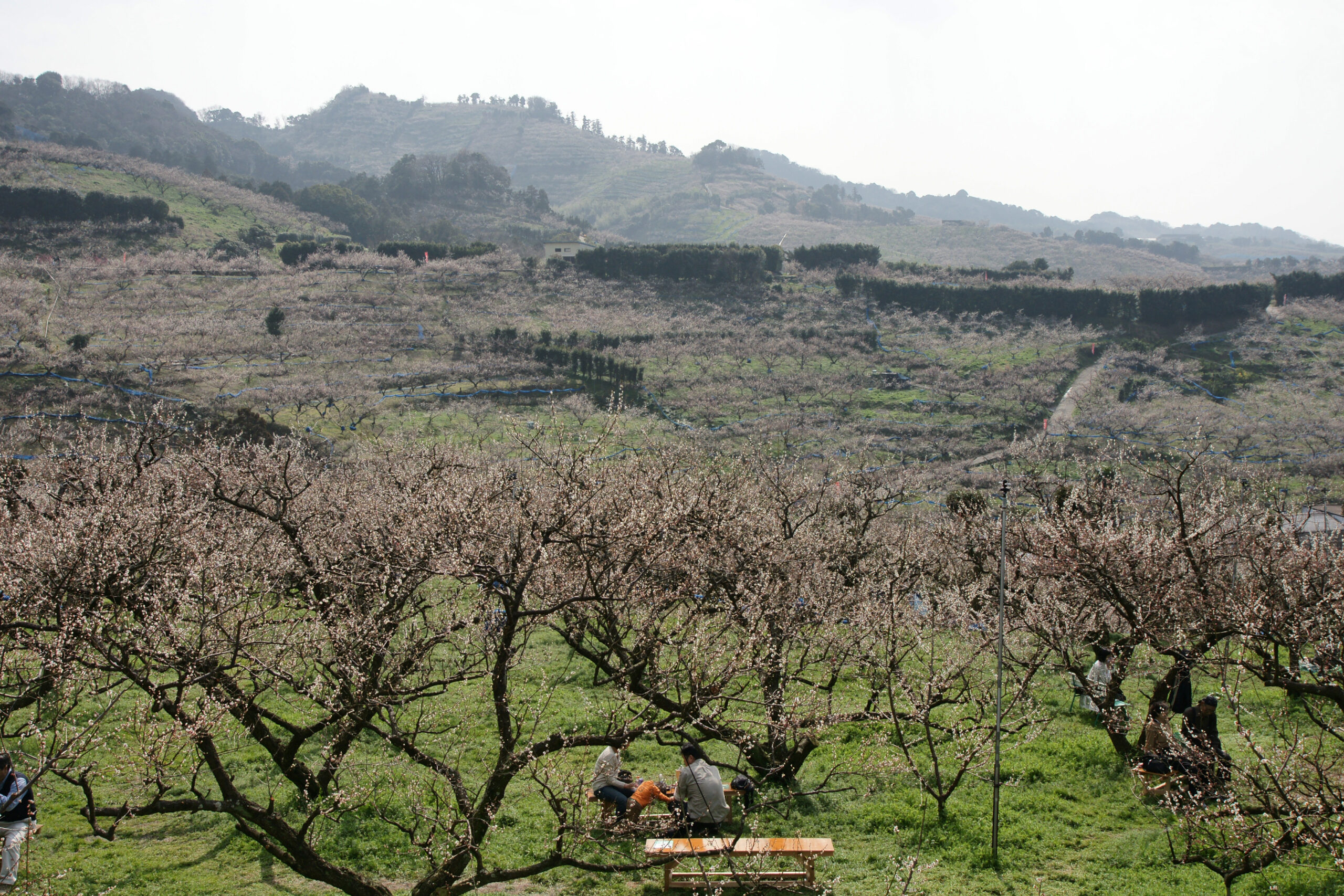
What was recognized as a Globally Important Agricultural Heritage System (GIAHS) in 2015 is “the Minabe-Tanabe Ume System.” What draws attention isn’t just the quality of the ume, but the farming system that has endured by combining sloped ume groves with the surrounding coppice woodland.
Rather than converting the entire forest into farmland, the system keeps the forest while making use of it. Once you factor in water retention, slope stabilization, wildlife habitat, and fuel resources, the scenery of white blossoms starts to look a little different. What lies outside the grove is also what supports it.
Why Binchotan Charcoal and Ume Share the Same Landscape
Coppice woodland of ubame oak and similar trees, known as the raw material for Kishu Binchotan charcoal, has shaped local land use together with the ume groves. Charcoal-making isn’t simply a matter of burning ume by-products; it’s a craft with its own distinct techniques and labor.
The wisdom of using a forest while maintaining it and the wisdom of growing ume accumulate on the very same mountainside. On a souvenir shelf, umeboshi and charcoal sit in separate rows, but walking the growing region, the distance between them turns out to be shorter than you’d think.
Planting Only Nanko Ume Alone Isn’t a Safe Bet
Nanko is a self-incompatible cultivar, meaning fruit rarely sets from pollen of the same cultivar alone. Pollen from a compatible different cultivar, and an overlap in bloom timing, become essential. Pollinizer trees aren’t “unsellable trees mixed in”; they’re vital to supporting the harvest.
What’s more, the activity of the insects that carry the pollen is also affected by weather. The fact that you can’t immediately conclude “lots of blossoms means a bumper harvest” is part of what makes fruit growing difficult. The relationship between the Japanese honeybee and ume reveals a piece of that.
Warm Weather Doesn’t Automatically Mean Everything Goes Smoothly
Weather during the bloom period, pollination conditions, and spring hail damage all affect both yield and quality. Wakayama Prefecture has published support information in response to hail damage in 2025. Changes in price and harvest volume can’t be explained away simply by how hard farmers worked.
According to prefectural published data, the 2025 harvest came to 43,000 tons. That is the figure for that particular year — it is neither a fixed annual scale nor a confirmed figure for 2026. Shopping in season carries the added pleasure of paying attention not just to the season, but to “that particular year.”
Ministry of Agriculture, Forestry and Fisheries | The Minabe-Tanabe Ume System MAFF aff Magazine | Forests, Ume Groves, and People’s Work Wakayama Prefecture | Hidaka Region Agriculture – New Ume Cultivars MAFF Kinki Regional Agricultural Administration Office | Japanese Honeybees of Minabe Town Wakayama Prefecture | Ume Production Support Wakayama Prefecture | National Rankings – 2025 (Reiwa 7) Ume Harvest
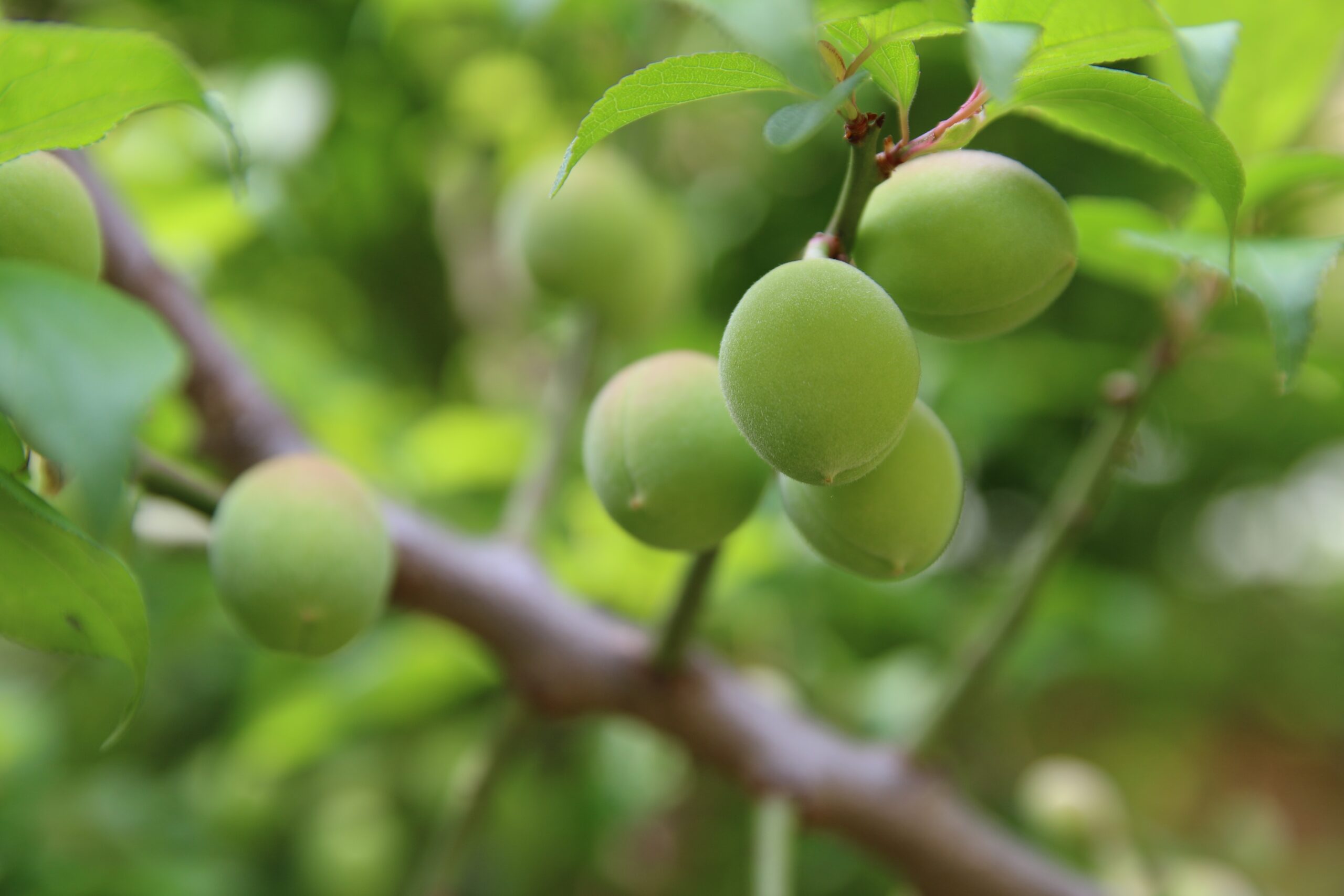
Beyond Nanko: A Field Guide to Ume Cultivars.
Choose by size alone, and you’ll miss what makes each ume distinctive. Ripening time, skin, flesh, color, pollination traits — each cultivar has its own stage where it shines.
Nanko — The Lead Role, Both as Green Ume and Fully Ripened Ume
Thin-skinned, generously fleshed, with a relatively small pit. Nanko has a strong association with umeboshi, but as green fruit it’s also used for umeshu and other products. There’s no need to think of green Nanko and yellow, fully ripened Nanko as different cultivars just because they look different.
Cultivar and ripeness are separate axes. Even under the same name, how you choose depends on what stage it’s harvested at and what you intend to make. The shortcut to understanding Nanko isn’t memorizing the phrase “top grade” — it’s actually comparing green fruit and fully ripe fruit side by side.
Gojiro — Green Ume That Gets a Head Start on Early Summer
The name is read “Gojiro,” not “Kojo.” According to Wakayama Prefecture’s introduction to the Nishimuro region, it’s shipped as green fruit earlier than Nanko, from late May through early June. It’s a juicy cultivar known for umeshu.
If you’re waiting only for Nanko, you might miss Gojiro, which appears on shelves first. Once you connect timing with cultivar, the ume display stops looking like everything starts at once, and starts looking like a place where the leading role changes hands in sequence.
Purple Queen — A Small Fruit, Enjoyed for Its Color
A small, reddish-purple ume; Wakayama Prefecture’s introduction gives the fruit weight as roughly 5-6g. Local cultivar records list it as a bud sport of Hakuo, and it draws attention when people are enjoying the color of ume syrup or umeshu. Being red doesn’t mean it was dyed with red shiso.
Even a small fruit can carry a strong individual character through color. That said, the finished color also varies with ingredients and method, so it’s more enjoyable not to assume this cultivar guarantees a color that matches a product photo down to the last drop.
Purple Nanko — A Similar Name, but a Different Line from the Queen
Local records list this as a bud sport of Nanko. Purple Queen is a bud sport of Hakuo; Purple Nanko is a bud sport of Nanko. Despite sharing similar “purple” names, their origins are not the same.
A bud sport is selected by using a trait difference that appears in part of a single tree as a clue. Once you distinguish this from breeding, which crosses two different parent trees, the family tree of cultivars becomes much easier to read.
Tsuyuakane — A Story of Crossbreeding Behind Its Red Flesh
A cultivar bred by NARO, derived from a cross between the plum “Kasahara Botankyo” and the ume “Yosei.” It’s distinguished by red flesh, not just red skin, letting the color carry through into processed products. It isn’t an alternate name for a red Nanko, nor is it a large-fruited version of Purple Queen.
A parentage that you can’t tell from the cultivar name alone is what accounts for its distinctive appearance. Because fruit size and coloring are also affected by growing conditions, research averages shouldn’t be treated as a guaranteed value for any individual fruit.
Toko — An Orange Personality for Ume, Too
A cultivar bred by Wakayama Prefecture, crossing Nanko with Jizo ume. As it ripens, both skin and flesh take on an orange tinge, and it’s noted to be high in beta-carotene. It was registered as a cultivar in 2009.
A notable nutritional profile doesn’t mean effectiveness against any specific disease. What’s interesting here is simply that the world of ume color isn’t limited to green, yellow, and red. Choosing a cultivar by color as your entry point also broadens the fun of processing it.
NK14 — Breeding That Also Targets Ease of Fruit-Setting
Bred by crossing Nanko with Kensaki, this Wakayama Prefecture cultivar was registered in 2009, the same year as Toko. It’s noted for self-compatibility and an earlier ripening time than Nanko. The ability to set fruit with its own pollen is a major difference when thinking through cultivation.
However, the term “self-compatible” isn’t a guarantee of “a bumper harvest regardless of weather.” Cultivar breeding isn’t magic — it’s work that reduces, one at a time, the practical difficulties growers face in the field.
Suiko — An Entry Point Chosen for Umeshu Aroma
A NARO cultivar derived from a cross between Gessekai and Baigo. It’s a name that comes up when thinking about processing quality, particularly for umeshu. Unlike selecting for attractive fresh fruit, this cultivar is evaluated with an eye to the aroma and flavor it develops after processing.
The measure by which you choose ume isn’t fruit size alone. What do you want to make, and how do you want to enjoy it? Working backward from the finished glass to choose your cultivar is, in its own way, a quite thoughtful way to shop.
Reiwa and Wago — Looking at Nationwide Breeding, Too
Self-compatible cultivars announced by NARO in 2020. Reiwa is also notable for its double white blossoms; along with Wago, it was bred with fruit and cultivation traits in mind. This is not listed here to imply it’s always available at shops in Wakayama.
It’s worth keeping the established mainstays of the growing region separate from new options born out of research. It’s also important not to assume, just because of the “new cultivar” label, that it’s automatically ideal for umeboshi, umeshu, and ornamental use all at once.
Hoshidaka and Hoshihide — Tackling Disease and Pollination Challenges
Cultivars that Wakayama Prefecture is working to promote, bred for self-compatibility and resistance to black spot disease. This is breeding aimed at inheriting the good qualities of Nanko while considering ease of cultivation. Resistance doesn’t mean immunity from every disease.
Even improvements that eaters rarely notice matter for keeping the growing region going. Once you pay attention to the “ease of growing” behind the flavor, the way you read news about new cultivars changes.
Still More Local Names — Hakuo, Beniou, Kinugasa, Minabe-wase, and Others
The GIAHS application materials list still more local strains and cultivar names — Kairyo-Uchida, Minabe-wase, Hakuo, Beniou, Kinugasa, Koryu Nanko, Minabe 21, and more. Also recorded are names such as Hachiro, Shirakaga, Juro, Oshuku, Koshu-saikin, Orihime, and Ryukyo Koume.
This is a roster meant to convey the diversity of cultivation at the time the document was compiled — it is not a current sales inventory. We won’t append imagined descriptions of aroma or texture to names for which little information exists. That blank space is worth leaving as it is, part of the interest of reading old agricultural records.
Wakayama Prefecture | Nishimuro Ume – Shipping Season Minabe Town | Minabe-Tanabe Ume System application Wakayama Prefecture | Purple Queen Wakayama Prefecture | Agricultural Experiment Station News No. 75 – NK14 and Toko NARO | Fruit Tree Cultivar Introduction 2025 NARO | Tsuyuakane Cultivation Management Manual NARO | New Cultivars “Reiwa” and “Wago” Wakayama Prefecture | Hidaka Region Agriculture – New Ume Cultivars
Working Back Through Ume’s Year, Starting from the Blossom.
When the day you saw the blossoms and the day you salted the ume connect in your mind, the resolution of the season sharpens. For the growing region, ume is not a crop confined to early summer alone.
Blossom Season — The Flowers You See, and the Pollination You Don’t
From winter into early spring, branches full of blossoms are the pleasure of ume-viewing season. Meanwhile, in the orchards, overlapping bloom times and insect activity determine the later harvest. Peak bloom shifts with cultivar, location, and that year’s weather, so it’s best not to schedule a trip based solely on old bloom photos.
Ume groves are also working farmland. Walk only on open paths, don’t break branches, and don’t wander into orchards uninvited. The spots that tempt you to take one extra step for a photo are exactly the ones where holding back that step is the better way to enjoy the view.
Green Ume Season — Early Gojiro, Then Nanko
According to Nishimuro’s shipping guidelines, green Gojiro ships from late May through early June, and green Nanko from early through late June. This is a regional benchmark, not a nationwide harvest calendar. If you’re making umeshu or syrup, it helps to decide on your desired cultivar and intended use beforehand.
Even within the same box, condition isn’t necessarily uniform. Check for aroma and color, but also for any damage, and choose a verified procedure suited to the raw material you’ve actually bought.
Fully Ripe Season — Yellow Fruit and Softness
For fully ripe Nanko fruit intended for umeboshi, Nishimuro’s guideline runs from mid-June through early July. Handling the ripened fruit carefully, without bruising it, is what leads to a soft umeboshi. “Fully ripe” doesn’t mean it’s fine to leave the fruit sitting around for a long time before use.
When you buy green ume versus when you buy ripe ume, the tasks suited to each and the urgency differ. Ume work goes more smoothly when you decide what you want to make before you buy, rather than figuring it out after you’ve bought the ume.
Planning a Trip Around Two Different “Peak Seasons”
If you want to see the blossoms, come during ume-viewing season; if you want to encounter fresh fruit and ume work, come during harvest season. If your trip is about comparing umeboshi or learning history, you don’t need to be bound by just these two.
Wanting both blossoms and fully ripe fruit in a single visit is more than the season allows. Blossoms this time, fruit next time — planning it that way gives you a reason to come back to the same place.
Wakayama Prefecture | Nishimuro Ume – Shipping Season Minabe Tourism Association | Sightseeing Spots MAFF Kinki Regional Agricultural Administration Office | Japanese Honeybees of Minabe Town
Every Umeboshi Is a Stack of Processes.
Salt-curing ume doesn’t automatically turn every batch into the same umeboshi. Look separately at the ripeness of the raw fruit and the processes of curing, drying, and seasoning.
Shiraboshi and Seasoned Umeboshi — Not Better or Worse, Just Different Finishes
Ume salted and dried is eaten as-is, its saltiness and tartness intact. From there, some are desalted and seasoned, layering on flavors like honey or dashi. The breadth of flavors you see on a shelf comes from these differences in process.
Calling only one of the two “the real thing” narrows your options unnecessarily. Do you want a strongly salty ingredient for cooking, or do you want to enjoy a single ume as it is? Choosing based on how you’ll use it will get you closer to the ume that’s right for you.
“Curing” and “Drying” Are Separate Tasks
When you salt-cure the fruit, liquid is drawn out and rises as ume vinegar (umezu). Going through a drying process afterward is the basic flow to understand umeboshi-making. Umezu is the liquid obtained through this process — don’t substitute it for a brewed vinegar like rice vinegar; they’re not the same thing.
The term doyo-boshi (drying during the hottest stretch of summer) is well known, but it doesn’t mean the fruit is finished the moment a particular date on the calendar arrives. You proceed by watching the weather, fruit size, and actual dryness. Even within local procedures, the number of drying days varies — this is work that requires watching the sky and the fruit together.
A Red Umeboshi — What Exactly Is Red?
The red of an umeboshi made with red shiso and the color inherent in the fruit of Purple Queen or Tsuyuakane come from different origins, and it’s worth keeping them separate. Just because a product is red doesn’t mean it was made from a red-fleshed cultivar.
Conversely, it’s premature to see a syrup that showcases a cultivar’s natural color and assume it must contain added coloring. The answer to “why is it that color” lies in reading the cultivar, the ingredients, and the process together.
Small Ume Doesn’t Automatically Mean Crunchy
“All small fruit is suited to crunchy pickled ume (karikari-ume)” is a convenient-sounding but risky rule of thumb. The Kishu Tanabe Ume Promotion Council explains that small ume from Kishu is harvested at a ripened stage suited for soft umeboshi.
Fruit size is not a guarantee of texture. Look at the combination of cultivar, ripeness, and processing. When buying small ume, the shortcut is to check what use the raw fruit is suited for.
Post-Harvest Ripening Changes Aroma — But “Longer Is Always Better” Doesn’t Hold
Wakayama Prefecture research has examined how the ripeness of Nanko at harvest and subsequent post-harvest ripening relate to the aroma compounds and quality of umeshu. Aroma isn’t determined by cultivar name alone — subsequent handling matters too.
That said, you can’t take research conditions and translate them into a household rule like “leave it exactly this many days for the best result.” Choose a procedure that suits the condition of your raw material and what you’re making. Enjoying the aroma of ume and not overlooking spoilage should go hand in hand.
MAFF | Umeboshi of Wakayama Kishu Tanabe Ume Promotion Council | How to Make Umeboshi Kishu Tanabe Ume Promotion Council | Ume Work Wakayama Prefecture | Purple Queen NARO | Tsuyuakane Cultivation Management Manual Wakayama Prefecture Research Report | Nanko Ripeness and Umeshu Quality
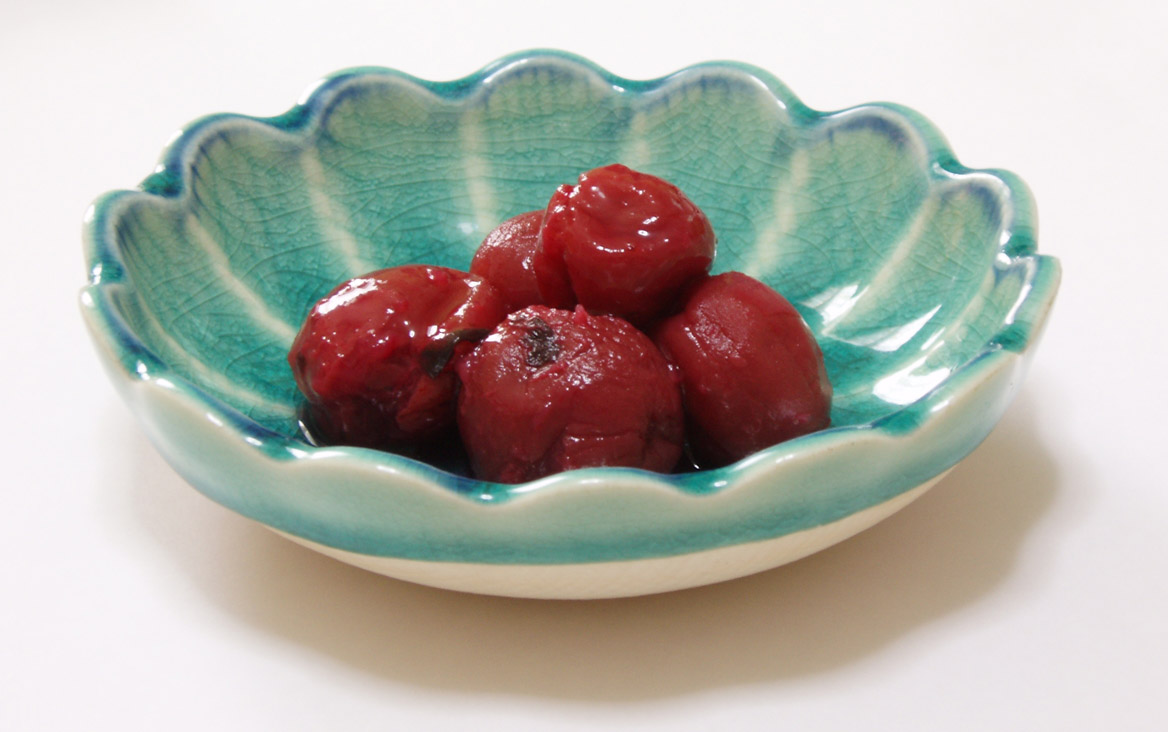
At the Ume Display, Read the Back Label.
Once you’ve looked at the cultivar name and the big photo, move on to the small print. A way of reading labels that makes shopping just a bit more interesting.
The First Thing to Check Is the “Name” Field
Under Japan’s Food Labeling Standards, terms like umeboshi, ume-zuke, and seasoned umeboshi are distinguished from one another. The large product name on the front and the “name” field on the back play different roles. Rather than imagining the process from the sound of the name alone, first use the “name” field to grasp the general finishing method.
Next, read the ingredient list. Is it built around ume and salt as the basics, or has it been adjusted with sugars, dashi, or other flavorings? Once you can articulate your own flavor preference, choosing your next bag becomes easier.
“Made in Wakayama” and “Wakayama Ume” Are Not the Same Piece of Information
The address of the seller or manufacturer is information about the business involved with the product. If you want to know where the raw ume actually came from, look for the country/region-of-origin labeling. Don’t assume the raw material’s origin just from a product name that evokes Kishu.
This isn’t about buying with suspicion — it’s about being able to understand what you’ve actually chosen. Whether you’re prioritizing origin on a given day or prioritizing flavor, being able to read the labeling lets you decide for yourself.
Salt Content — Which Number Are We Talking About?
The “salt equivalent” figure in nutrition labeling and the “what percentage of salt relative to the ume’s weight” figure found in ume-work recipes are different numbers. Don’t assume you can directly calculate the finished product’s salt equivalent from the ratio of salt added to the raw material.
If you’re comparing products, make sure you’re comparing like with like — per 100g or per piece. Don’t judge shelf stability from the word “reduced salt” alone; read through to the storage method and post-opening instructions, and you won’t be left second-guessing after you buy.
“Honkaku Umeshu” Isn’t Just an Adjective for “Impressive Umeshu”
“Honkaku umeshu” is a labeling term based on a voluntary industry standard that distinguishes umeshu made only from ume, sugars, and alcohol, with no added acidulants, coloring, or flavoring. Wakayama Prefecture describes this as a standard established in 2015.
Long aging, “product of Wakayama,” “made with Nanko,” and alcohol content are each separate pieces of information. When choosing a bottle, looking at ingredients, origin, base alcohol, and how it’s meant to be drunk as separate factors lets you see the differences even within the same shelf of umeshu.
e-Gov | Food Labeling Standards Kishu Tanabe Ume Promotion Council | How to Make Umeboshi Wakayama Prefecture | Honkaku Umeshu
Ume Work Is a Time for Cooking and Quiet Observation.
What’s inside the jar changes day by day. The pleasure of ume work begins before you ever taste the finished product. That said, don’t dilute the conditions for safe storage with your own improvisation.
Let What You’re Making Decide Which Ume You Buy
Are you aiming for a soft umeboshi, or making umeshu or syrup? Decide your goal first, then match the raw fruit’s cultivar and ripeness accordingly. Regional processing manuals bring together procedures organized by purpose — umeboshi, umeshu, syrup, jam, and more.
This article isn’t here to add yet another original low-salt recipe to the world. When you actually make a batch, read all the way through a verified procedure at the linked source, and use the ingredient ratios, equipment, temperature, and storage method together as a single set.
Don’t Bite Into Raw Green Ume. Don’t Sample What’s Inside the Pit, Either
Ume contains compounds that can generate cyanide compounds. Japan’s Ministry of Agriculture, Forestry and Fisheries advises enjoying ume only after appropriate processing and the necessary amount of time. Avoid eating the green fruit as-is, and avoid tasting what’s inside the pit as though it were some kind of health food.
A fruit smelling good and being safe to eat raw are not the same thing. Ume is a fruit meant to be enjoyed alongside a culture of processing. This is one point where “just a little taste won’t hurt” should not apply.
When You Reduce Salt, More Than Just the Flavor Changes
The desire to reduce saltiness and the conditions needed for stable preservation need to be thought through separately. We don’t recommend sharply cutting only the salt from a verified recipe while leaving every other condition unchanged. Follow the labeled storage method for store-bought reduced-salt products, too.
If you notice mold, an off odor, or other signs something is wrong, don’t confirm it by tasting. Don’t assume that removing the unsightly part will always fix things, either. The value of making preserved foods is that you can carry the experience into your next batch — without needing to force a risky rescue of this one.
Not-So-Small Conditions for Making Homemade Umeshu in Japan
According to Japan’s National Tax Agency, making umeshu for personal consumption comes with conditions such as using already-taxed alcohol of 20% ABV or higher. This is not a matter of being free to sell what you’ve made at home.
This figure is a matter of Japanese regulation — it’s not a recommendation for the alcohol content you should drink. If you’re making it outside Japan, check the laws of the place where you live. Keep the procedure for making it well and the conditions under which you’re permitted to make it as two separate things to understand.
If You’re Cooking With It, Treat a Single Ume as a Seasoning
Mince an umeboshi and use it for the tartness and saltiness of a dressed dish or a sauce. If you’re using umezu, adjust your other seasonings with its saltiness in mind. An ume seasoned with honey or dashi brings its sweetness and umami along with it.
This isn’t a claim about the origin of any particular traditional dish — it’s simply a suggestion from our editorial team for ways to enjoy it. Don’t add a large amount from the start; taste as you go, little by little. It’s interesting how the same dish can take on a different character just by changing which ume you use.
Kishu Tanabe Ume Promotion Council | Ume Work Kishu Tanabe Ume Promotion Council | Ume Work Q&A MAFF | Processing Ume Correctly for Safe, Delicious Results National Tax Agency | Home Brewing – Making Umeshu
Carry This Knowledge With You to Ume Country.
See the exhibits first, then head to the groves, and the work behind the white blossoms comes into view. Going home with only shopping to show for it would be a bit of a shame.
The Ume Promotion Hall — First, Reconnect the Threads of the Ume Story
Minabe Town’s Ume Promotion Hall (Ume Shinkokan) is a gateway to the history, culture, and growing region of ume. The tourism association’s guide introduces it as a facility where you can see exhibits themed around ume. Visit after reading about cultivars and processing, and the names on display stop being just words.
The display of old umeboshi conveys a sense of the history of preservation. But it isn’t an example to justify a household rule of “anything old is still safe to eat.” Appreciate the exhibit as an exhibit, and think about the food in your own hands according to its own storage conditions.
The Ume Groves — A Famous Blossom Spot, and Someone’s Workplace
Minabe’s sightseeing guide lists Minabe Bairin and other groves. Since ume-viewing events and open periods are announced year by year, don’t treat a past year’s dates as this year’s schedule. Check the walkable areas and transport information before heading out.
What’s worth looking at isn’t just the density of the blossoms. The way the slopes are used, the forest left standing around them, the paths leading to the fields. Search for the parts that don’t fit into a single photograph, and the phrase “Globally Important Agricultural Heritage” becomes a little more concrete.
Three Questions Worth Asking at the Shop
“What cultivar is this?” “Where is the raw ume from?” “How is it finished?” Knowing the answers to these three makes it much easier to put your tasting impressions into words. If you’re buying fruit for ume work, mentioning what you plan to make also helps narrow the choice.
Even without finding a rare cultivar, simply comparing different finishing styles of Nanko is plenty rewarding. You don’t need to buy shiraboshi, shiso-flavored, and seasoned versions all at once. Just remember the one you liked best this time, and bring that memory home.
Minabe Tourism Association | Ume Promotion Hall Minabe Tourism Association | Sightseeing Spots Ministry of Agriculture, Forestry and Fisheries | The Minabe-Tanabe Ume System
One More Layer Deeper, Starting From a Small Question.
The words you think you already know are the most interesting to unpack. A collection of ume questions worth taking home as a story to tell.
Green Ume or Nanko Ume — Which Should I Buy?
These aren’t terms on the same level. “Green ume” describes ripeness, while “Nanko” is a cultivar name — so “green Nanko ume” exists as a category. Decide what you want to make first, then choose the cultivar and ripeness, and you’re less likely to get confused.
Is Every Red Ume the Same Kind?
No. Purple Queen, a bud sport of Hakuo; Purple Nanko, a bud sport of Nanko; and Tsuyuakane, derived from a cross between plum and ume — all have different origins. And some of the red you see in processed products comes from an added ingredient like red shiso rather than the fruit itself.
Is a Bigger Fruit Always Tastier?
Size and personal preference are separate matters. Evaluation shifts with cultivar, ripeness, processing, saltiness or sweetness, and intended use. What you’d want to choose on a day you want a single ume on your rice differs from a day you want to add a small amount to a dish.
If I Plant the Pit, Will I Get the Same Nanko?
Keep propagation that preserves a cultivar’s exact traits separate from growing from a pit. An offspring grown from a pit isn’t guaranteed to have exactly the same traits as its parent, and the history of any cultivar itself often includes crossbreeding and selection among seedlings. Planting a pit doesn’t come with a guarantee that the result will carry the name “Nanko.”
Does Umeshu Always Get Better the Longer You Age It?
Quality can’t be determined by aging time alone. Ingredients, preparation, container, and storage conditions all play a part too. Follow the labeled storage method for commercial products, and a verified procedure for homemade batches — don’t treat time as a substitute for safety.
As Long as There Are Bees, Will Any Ume Bear Fruit?
Pollinating insects matter, but cultivar compatibility and overlapping bloom timing are also necessary. For the self-incompatible Nanko, a pollinizer tree of a different cultivar becomes meaningful. The fact that you can’t isolate the outcome to insects alone, trees alone, or weather alone is part of what makes an ume grove fascinating.
Does Adding Umeboshi Keep a Bento From Spoiling?
A single umeboshi cannot guarantee the safety of an entire bento. Ume’s historical character as a preserved food is a separate matter from keeping a different food safe at room temperature. A bento still requires normal hygiene and temperature management.
If a Cultivar Isn’t in This Guide, Does That Mean It Doesn’t Exist?
Of course not. Here we’ve selected cultivars that help you understand Wakayama’s growing region, along with bred cultivars useful for comparison. This is not a complete worldwide catalog covering every old lineage name, every ornamental flowering ume, or every local name in existence. We’ve prioritized depth that can be traced back to primary sources.
Wakayama Prefecture | Nishimuro Ume – Shipping Season Minabe Town | Minabe-Tanabe Ume System application NARO | Tsuyuakane Cultivation Management Manual Wakayama Prefecture | Hidaka Region Agriculture – New Ume Cultivars MAFF | Processing Ume Correctly for Safe, Delicious Results
Keep These Ume Terms Close at Hand.
Connecting meanings matters more than memorizing names. A small glossary for whenever you come back to reread this article.
Seedling, Crossbreeding, Bud Sport
A seedling (mishō) is an individual grown from seed. Crossbreeding (kōhai) means crossing two different parent trees. A bud sport (edagawari) means focusing on a trait difference that has appeared in part of a tree. Distinguishing these three terms when reading about a new cultivar makes the story of its lineage much easier to follow.
Self-Compatible, Self-Incompatible
The ability to set fruit using its own pollen, versus difficulty setting fruit with pollen from the same cultivar. These are terms relevant to cultivation planning — not a ranking of flavor.
Umezu, Shiraboshi, Seasoning
Umezu (ume vinegar) is the liquid obtained through salt-curing. Shiraboshi refers to the basic finish achieved through salt-curing and drying alone. Seasoning (chōmi) is the process of adjusting flavor. Don’t decide based on color or product name alone — look at the ingredient list and the “name” field together.
Globally Important Agricultural Heritage Systems (GIAHS)
A framework that recognizes a region’s agriculture, way of life, biodiversity, and landscape as a single integrated whole. “The Minabe-Tanabe Ume System” was designated in 2015. It does not carry the same meaning as a quality-guarantee mark on any one particular bag of product.
Minabe Town | Minabe-Tanabe Ume System application NARO | New Cultivars “Reiwa” and “Wago” Kishu Tanabe Ume Promotion Council | How to Make Umeboshi Ministry of Agriculture, Forestry and Fisheries | The Minabe-Tanabe Ume System
Traveling Japan’s Ume by Name.
Once you know Nanko, move on to the standard cultivars by region. Even within categories like ‘for umeboshi’ or ‘for ume liqueur,’ there are many options. Let’s start by tracing the differences among representative cultivars introduced by municipalities and research institutions.
Shirakaga, Baigo, Gyokuei | Distinguishing the Names of Green Ume
Shirakaga is a fruiting ume cultivar with large, firm flesh. Baigo originates from Ome, Tokyo, and is used for both umeboshi and ume liqueur. Gyokuei is also a cultivar originating from Ome; despite its similar name, it is not another name for Shirakaga.
Even a bag at the store simply labeled ‘for ume liqueur’ hides these cultivar differences. Don’t assume that the same intended use means the same flavor and results—jotting down the cultivar name turns next year’s ume work into a small comparative experiment.
Juro, Sugita | Two Names for Understanding Odawara’s Umeboshi
Juro, beloved in Odawara for umeboshi, is characterized by its thin skin and soft flesh. Sugita is also an old cultivar used for umeboshi in the same region. Both serve as an entry point for those seeking ‘umeboshi that isn’t Nanko.’
Cultivar differences also affect how ripeness is judged. Kanagawa Prefecture explains that Juro may not turn yellow while still on the tree. It’s important not to judge all ume by the single standard that ‘yellow means ripe.’
Benisashi, Kensaki | Fukui Ume Also Has Two Faces
Benisashi turns crimson where sunlight hits it as it ripens, and is used for both umeboshi and ume liqueur. Kensaki has a slightly pointed tip and is one of the green ume shipped early in Fukui; it is introduced as suited to ume liqueur and syrup.
‘Fukui Ume’ is not a single cultivar name but a collective term for ume from that region. Stepping past the place name to read the cultivar written on the bag adds to the pleasure of choosing.
Shinheidayu, Fukudayu | A Parent-Child Relationship Behind Similar Names
Shinheidayu is an ume cultivar bred in Fukui Prefecture and registered in 1986. Fukudayu was born from a cross between Shinheidayu and Orihime, and was registered in 2005. These two similarly named cultivars share a breeding connection.
Shinheidayu is a somewhat late-maturing cultivar suited to umeboshi, while Fukudayu is early-maturing and used for both umeboshi and ume liqueur. Even within the same region, one can see behind these names how harvest timing and processing options have been expanded.
Koshu Koume | Small Size, Wide Range of Enjoyment
Yamanashi’s Koshu Koume is a small ume known as a local specialty since the late Edo period. Although it is strongly associated with crunchy pickled ume (karikari-ume), Yamanashi Prefecture also introduces its use in ume liqueur, wine, and jam. There’s no need to confine a small fruit to a small range of uses.
Since ‘koume’ (small ume) is also used simply to describe size, that term alone doesn’t necessarily identify a single cultivar. It’s best to choose based on both the cultivar name the producer lists and the intended processing use.
Ryukyo Koume, Koshu Saisho | Even Small Ume Have Different Origins
In Odawara City’s cultivar introduction, Ryukyo Koume is described as a cultivar discovered in an orchard in Shimoina, Nagano Prefecture, while Koshu Saisho is described as having been introduced from Nara to Okitsu in 1917. Even among small-fruited ume, their origins are not the same.
Similar-looking labels such as ‘Koshu Koume,’ ‘Koshu Saisho,’ and ‘Koume’ are more interesting when you don’t mechanically treat them as identical based on distribution names alone. Try cross-checking the cultivar names in reference materials with the labeling on the product in front of you.
Yumimaru | An Ume Whose Store Name Differs from Its Registered Name
Gunma Prefecture’s ‘Yumimaru’ is a trademark name; its registered cultivar name is ‘Gunma U6.’ It was registered as a cultivar in 2020 and trademarked in 2022. It is a cultivar with round fruit and pit, is self-fruitful, and is also suited as a pollinizer for Shirakaga.
If you can’t find information by searching the product name shown in stores, check whether there is a separate registered cultivar name. This single step can sometimes let you trace the cultivar’s origin and cultivation characteristics.
Flowering Ume Are Not Classified by Color Alone.
When admiring the blossoms, look at the color of the petals, their layering, and the shape of the branches. When researching names, turn to the yardstick of classification. Viewing the same ume through both lenses makes ume blossom viewing much richer.
Yabai, Hibai, Bungo Groups | Three Entry Points for Reading Flowering Ume
The explanation from Jindai Botanical Gardens introduces flowering ume through the broad groupings of Yabai, Hibai, and Bungo. This is not a chart that simply divides flower color into white, red, and pink. Since there are multiple ways to organize finer classifications, it’s worth reading the classification method used by each reference guide as well.
A Red Flower Classified as Yabai? A White Flower Classified as Hibai?
In the Hibai group, the red color inside the branch also serves as a clue for classification. Jindai Botanical Gardens introduces Yaekankou, which has red flowers, as belonging to the Yabai group, and Yukinoakebono, which has white flowers, as belonging to the Hibai group. If you assume flower color and group name are the same thing, this is exactly where confusion arises.
Omoinomama, Tsukikage | Take Another Look at the Flower’s Name Tag
Wachigai is also called ‘Omoinomama,’ and a single plant can display multiple flower colors. Tsukikage stands out for its white flowers tinged with blue and its green calyx. Once you know the flower names, each tree that looked like the same white ume from a distance begins to reveal its own individual expression.
Wintersweet and ‘Ume with a Bush Warbler’ | Observing Beyond Names and Motifs
Wintersweet (robai) has ‘ume’ in its name, but it belongs to a different plant family from Prunus mume. The small birds seen sipping nectar from ume blossoms include the Japanese white-eye and the brown-eared bulbul, among others. Let’s enjoy the long-cherished motif of ‘ume with a bush warbler’ separately from the actual names of the plants and birds in front of us.
To Dig One Level Deeper.
Rather than competing over the number of names, arm yourself with tools for spotting differences. Connecting the mechanics of the orchard, how to read the numbers, and old illustrated records lets you walk beyond this encyclopedia on your own.
Lacking Pollen and Being Unable to Fruit with One’s Own Pollen Are Different Things
NARO’s research explanation distinguishes between the male sterility of Shirakaga and Gojiro and the self-incompatibility of Nanko and Oshuku. The former is a problem on the side of producing usable pollen, while the latter is a mechanism in which fertilization is difficult in combination with itself even though pollen exists.
That’s why choosing a pollinizer tree doesn’t end with simply ‘planting another ume tree.’ In addition to pollen characteristics, whether the flowering periods overlap also matters. Even for cultivars that fruit relatively easily on their own, weather and the condition of the flowers are not irrelevant.
Cultivation Area Rankings Are Not a Complete List of Cultivars
NARO’s published data on cultivation area by cultivar for the 2018 harvest lists Nanko, Shirakaga, Benisashi, Bungo, Ryukyo Koume, Oshuku, and others. While it serves as a clue for finding Japan’s major fruiting ume cultivars, it is not a comprehensive list covering flowering ume or rare regional lineages.
This table shows figures for the 2018 harvest and should not be read as reflecting current market share. Only by aligning the statistical year, the region covered, and whether the cultivar is fruiting or flowering ume can cultivars be correctly compared with one another.
From Edo-Period Illustrated Records to Modern Cultivar Names
The National Diet Library’s exhibition on ume lets you trace the Edo-period ‘Kadan Chikinsho’ and Ogawa Anson’s ‘Baifu,’ expanded during the Meiji era. Ume was not only something to be pickled, but also a subject whose flower differences were distinguished, named, and recorded in illustrations.
Even if you find a name in an old illustration that resembles a modern one, don’t conclude from that single word alone that it is the same individual or lineage. Read alongside alternate names, classification methods, and the features of the illustration. That extra effort transforms an old ume book from a mere collection of beautiful pictures into a gateway for inquiry.
Primary sources
Sources checked: September 23, 2026
- Royal Botanic Gardens, Kew | Prunus mume
- Kishu Tanabe Ume Promotion Council | Ume in Japan
- Kishu Tanabe Ume Promotion Council | Ume of Kishu
- Minabe Town | Specialty Products – The Birth of Nanko Ume
- Ministry of Agriculture, Forestry and Fisheries | The Minabe-Tanabe Ume System
- MAFF aff Magazine | Forests, Ume Groves, and People’s Work
- Wakayama Prefecture | Nishimuro Ume – Shipping Season
- Minabe Town | Minabe-Tanabe Ume System application
- Wakayama Prefecture | Purple Queen
- Wakayama Prefecture | Agricultural Experiment Station News No. 75 – NK14 and Toko
- NARO | Fruit Tree Cultivar Introduction 2025
- NARO | Tsuyuakane Cultivation Management Manual
- NARO | New Cultivars “Reiwa” and “Wago”
- Wakayama Prefecture | Hidaka Region Agriculture – New Ume Cultivars
- MAFF Kinki Regional Agricultural Administration Office | Japanese Honeybees of Minabe Town
- MAFF | Umeboshi of Wakayama
- Kishu Tanabe Ume Promotion Council | How to Make Umeboshi
- Kishu Tanabe Ume Promotion Council | Ume Work
- Kishu Tanabe Ume Promotion Council | Ume Work Q&A
- MAFF | Processing Ume Correctly for Safe, Delicious Results
- e-Gov | Food Labeling Standards
- National Tax Agency | Home Brewing – Making Umeshu
- Wakayama Prefecture | Honkaku Umeshu
- Wakayama Prefecture Research Report | Nanko Ripeness and Umeshu Quality
- Minabe Tourism Association | Ume Promotion Hall
- Minabe Tourism Association | Sightseeing Spots
- Wakayama Prefecture | National Rankings – 2025 (Reiwa 7) Ume Harvest
- Wakayama Prefecture | Ume Production Support
- Odawara City | Ume Cultivars
- Fukui Prefecture | Introduction to Fukui Ume
- Gunma Prefecture | Yumimaru and Gunma U6
- Yamanashi Prefecture | Koshu Koume
- Kanagawa Prefecture | Ume Harvest and Cultivars
- Jindai Botanical Gardens | Ume Guide Pamphlet (PDF)
- NARO | Ume Cultivation Area by Cultivar, 2018 Harvest
- NARO | Ume Production and Research (PDF)
- National Diet Library | Appreciating Ume
Bloom timing, business hours, events, and cultivars on sale change by year and season. Please check each facility’s official information before you go.
About the photos
Photos reflect conditions at the time they were taken. Photos in which the cultivar has not been identified are not presented as samples of any specific cultivar.
Nanbu Bairin, Minabe Town, Wakayama Prefecture. Photographed in 2009. 663highland · CC BY 2.5
Fruit of Prunus mume. Reference plant photo taken in Gangneung, South Korea. Cultivar unidentified. Manseok Kim · CC0 1.0
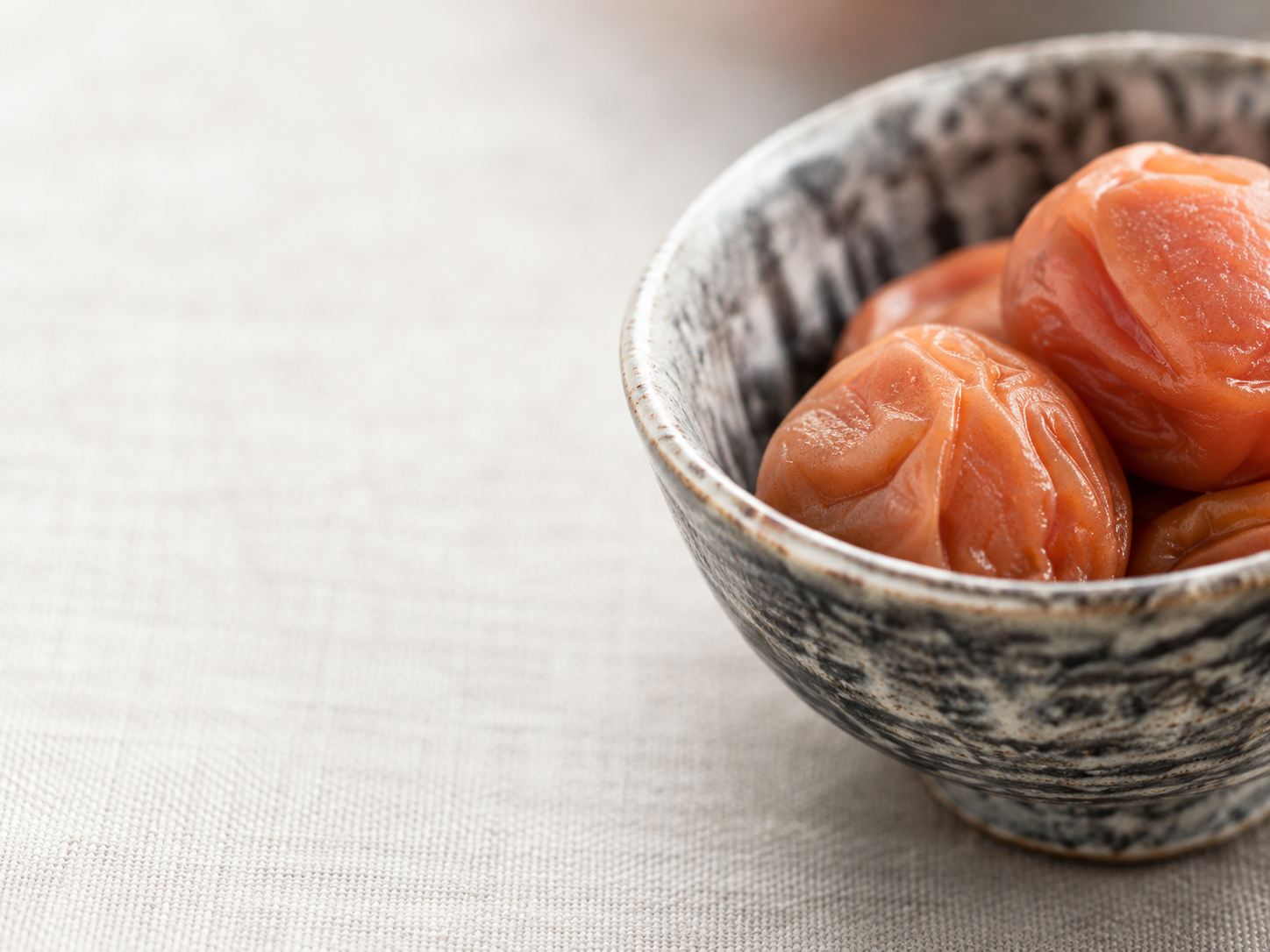
Reference photo of umeboshi (pickled ume). Origin and cultivar unidentified. SEKIUCHI · CC BY-SA 3.0
The opening ume image, the ume grove banner, the entrance illustration, and the ume work cards are AI-generated decorative material. They are not photographs proving actual growing regions, historical records, products, or cultivars. Documentary photographs in the body text follow the credits below.
Responsive crop / CC BY-SA adaptations: CC BY-SA 3.0